Maasai Jumping Ceremony: Athletic Prowess and Tradition
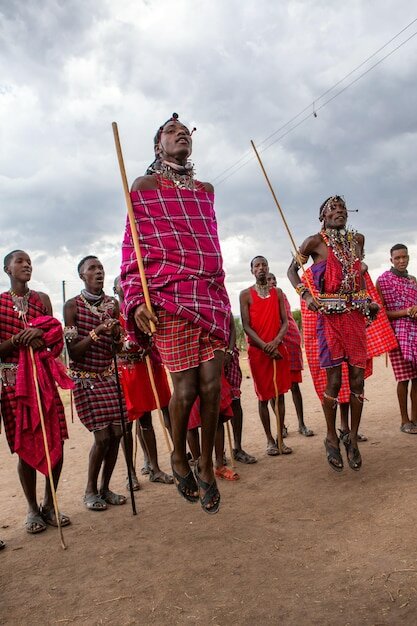
The adumu, commonly known as the Maasai jumping dance, represents one of East Africa's most recognizable cultural practices. Young Maasai warriors, called moran, compete to achieve the highest vertical jumps while maintaining rigid posture and never allowing their heels to touch the ground. This athletic ritual serves as both a display of physical prowess and a crucial element of the Eunoto ceremony, which marks the transition from warrior to elder status.
Cultural Context and Meaning
Among the Maasai people of Kenya and Tanzania, the jumping ceremony forms an integral part of male coming-of-age rituals. Warriors spend years preparing their bodies for these displays, as jumping ability directly correlates with status within the warrior age-set. The highest jumpers attract the attention of young women and earn respect from elders, making athletic performance inseparable from social standing.
The ceremony occurs during the Eunoto, a rite of passage that happens approximately every 15 years when an entire age-set of warriors graduates to the next life stage. During this multi-day event, moran gather wearing elaborate ceremonial attire, including ochre-painted bodies and intricate beadwork. The jumping competition serves as the climactic demonstration of the physical conditioning warriors have maintained throughout their service to the community.
Technique and Performance
Participants form a circle, singing rhythmic chants that provide musical accompaniment to the jumps. Individual warriors then step into the center, launching themselves vertically while keeping their bodies straight and arms close to their sides. The technique requires explosive leg power combined with core stability to maintain perfect posture during flight. Landing must be controlled and silent, demonstrating complete body mastery.
Unlike Western high jump techniques, the adumu prohibits bending at the waist or using arm momentum. This restriction makes the athletic achievement even more impressive, as jumpers rely solely on leg strength and timing. Some exceptional performers reach heights exceeding two feet, an remarkable feat given the technical constraints and the fact that jumps are performed repeatedly throughout the day-long ceremony.
Athletic Training
Maasai warriors develop jumping ability through their daily activities as pastoralists. Walking vast distances while herding cattle builds leg endurance, while the practice of standing on one leg for extended periods develops balance and stabilizer muscle strength. Young boys begin informal jumping competitions years before their warrior initiation, gradually building the explosive power needed for ceremonial performances.
Traditional training also includes specific exercises designed to increase vertical leap capacity. Warriors practice jumping over progressively higher sticks, similar to modern plyometric training methods. The competitive nature of Maasai society ensures that each generation seeks to surpass their predecessors, maintaining high athletic standards across centuries.
Modern Adaptations
Contemporary Maasai communities continue to practice the jumping ceremony, though some traditions have adapted to modern circumstances. Tourism has brought international attention to the adumu, with cultural centers offering demonstrations for visitors. While some critics worry about commercialization, many Maasai view these performances as opportunities to share their heritage while generating income.
The Maasai Olympics represents an innovative reinterpretation of traditional athletic competitions, redirecting warrior energy from lion hunting toward sporting contests. This modern tournament includes traditional jumping as one of several events, preserving the cultural significance while adapting to contemporary conservation priorities. Such initiatives demonstrate how indigenous sports can evolve while maintaining their essential character, similar to developments in Zulu shield dance competitions.