Nubian Wrestling: Ancient Egypt's Athletic Legacy
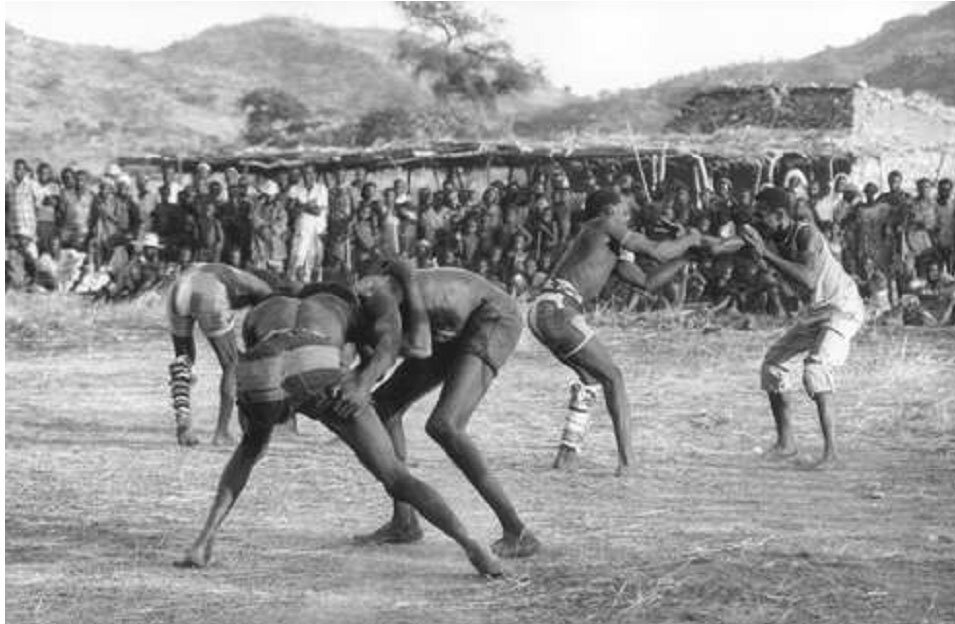
Nubian wrestling represents one of Africa's oldest documented athletic traditions, with depictions found in ancient Egyptian tombs dating back over 4,000 years. The Nubian people, inhabiting the region along the Nile between modern Egypt and Sudan, have maintained wrestling traditions that connect contemporary practice to pharaonic civilization, preserving techniques visible in hieroglyphic illustrations.
Archaeological Evidence
The tomb of Baqet III at Beni Hasan, dating to approximately 2000 BCE, contains detailed wall paintings depicting over 400 wrestling positions and techniques. Many of these illustrated techniques remain recognizable in modern Nubian wrestling, suggesting remarkable continuity across millennia. The paintings show wrestlers using hip throws, leg sweeps, arm locks, and ground control methods that contemporary Nubian athletes still employ.
Ancient Egyptian texts describe wrestling as both entertainment and military training, with pharaohs themselves reportedly participating in matches. Nubian wrestlers served in Egyptian armies, their combat skills valued for hand-to-hand fighting. This martial application ensured wrestling techniques were refined for effectiveness rather than purely ceremonial purposes, creating a robust system that has survived intact to the present day.
Traditional Techniques
Nubian wrestling emphasizes upper-body control, with wrestlers gripping opponents' arms, shoulders, or waist to execute throws. The style prohibits strikes and focuses on unbalancing opponents through leverage and timing rather than raw strength. Matches begin from standing positions, with victory achieved by forcing an opponent's back to touch the ground or by causing them to fall in a controlled manner.
Training traditionally occurs on sandy ground near the Nile, providing a forgiving surface for throws while building leg strength through the unstable footing. Young boys begin learning through informal play, gradually progressing to supervised training under experienced wrestlers. The teaching method emphasizes repetition and gradual skill accumulation rather than formal instruction, with techniques transmitted through demonstration and practice.
Cultural Context
In Nubian communities, wrestling maintains strong cultural significance, featuring prominently in wedding celebrations, festivals, and community gatherings. Successful wrestlers earn respect and status, with their achievements celebrated in songs and stories passed through oral tradition. The sport serves as a link to ancestral heritage, connecting contemporary Nubians to their pharaonic past.
Wrestling also functions as a rite of passage for Nubian boys transitioning to manhood. Demonstrating wrestling competence signals readiness for adult responsibilities, including marriage and community leadership roles. This social function embeds wrestling deeply in the cultural fabric, ensuring its continuation across generations despite modernization pressures affecting traditional practices.
Challenges and Preservation
Modern Nubian wrestling faces significant challenges, particularly from the displacement of Nubian communities caused by Aswan High Dam construction in the 1960s. Forced relocation disrupted traditional village structures where wrestling knowledge was transmitted, with many relocated Nubians adopting urban lifestyles that leave little space for traditional athletic practices.
Additionally, the popularity of modern sports like football has diverted youth interest away from traditional wrestling. Economic pressures encourage young Nubians to pursue careers with financial rewards rather than dedicating time to unpaid athletic training. These factors have reduced the number of active wrestlers and knowledgeable teachers, threatening the tradition's survival.
Revival Efforts
Cultural organizations in Egypt and Sudan have initiated programs to document and preserve Nubian wrestling. Video documentation captures techniques from elderly masters before their knowledge disappears, creating archives for future reference. Some Nubian cultural centers offer wrestling classes for youth, attempting to maintain the tradition through formal instruction supplementing traditional informal transmission.
Academic interest in ancient Egyptian sports has brought international attention to Nubian wrestling as a living connection to pharaonic athletics. Researchers studying historical wrestling have consulted with Nubian practitioners, whose maintained techniques offer insights into ancient practices. This scholarly attention has elevated wrestling's prestige within Nubian communities, encouraging some youth to engage with their athletic heritage.
The broader movement toward UNESCO recognition of traditional African sports provides hope for increased support for Nubian wrestling preservation. Official heritage status could bring resources for training facilities, coaching programs, and cultural festivals featuring wrestling competitions, similar to successful preservation models implemented for Ethiopian wrestling traditions.