Mancala Games: Mental Athletics Across the Continent
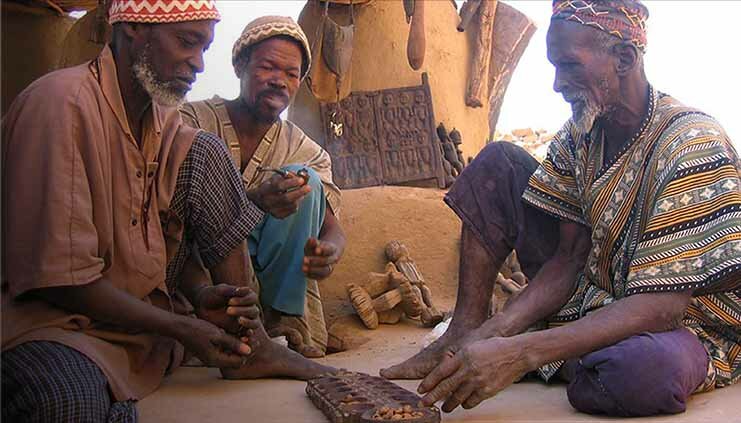
Mancala represents not a single game but a family of count-and-capture games played across Africa for thousands of years. With names like Oware, Bao, Omweso, and Giuthi varying by region, these games share fundamental mechanics: distributing seeds or stones among hollows carved in wooden boards or dug in the ground, capturing opponent's pieces through strategic play. Mancala games require mathematical thinking, pattern recognition, and forward planning, making them mental athletic competitions as demanding as physical sports.
Ancient Origins
Archaeological evidence places Mancala's origins in ancient Ethiopia and Eritrea, with game boards carved into stone dating back over 1,300 years. The games likely developed even earlier, with simpler versions played in holes dug in the earth long before permanent boards were created. As trade routes connected African regions, different Mancala variants spread across the continent, adapting to local cultural contexts while maintaining core gameplay principles.
Historical accounts describe Mancala as entertainment for African nobility, with elaborate carved boards serving as status symbols. Common people played with simpler equipment, but the strategic depth remained constant across social classes. The game's portability—requiring only a playing surface and seeds—allowed it to spread rapidly, with travelers introducing Mancala to new communities along trade routes.
Regional Variations
West African Oware uses a board with two rows of six hollows, with four seeds initially in each hollow. Players distribute seeds counter-clockwise, capturing when their move ends in an opponent's hollow containing two or three seeds. The game emphasizes careful counting and the ability to visualize multiple moves ahead, as advanced players calculate complex sequences of captures.
East African Bao, particularly popular in Tanzania and Kenya, uses a more complex four-row board with intricate rules governing seed movement and capture. Bao is considered one of the most sophisticated Mancala variants, with professional players dedicating years to mastering its strategic depths. Tournaments in Zanzibar attract elite players competing for championships and monetary prizes, demonstrating Bao's evolution into a serious competitive sport.
Ethiopian and Eritrean communities play variants like Gebeta and Selus, which feature unique starting positions and capture mechanics. These regional differences create distinctive strategic landscapes, though the fundamental skill of calculating seed distributions remains constant. The diversity of Mancala variants across Africa mirrors the continent's cultural richness, with each version reflecting local preferences and innovations.
Strategic Depth
Despite simple rules, Mancala games possess remarkable strategic complexity. Players must track seed counts in multiple hollows simultaneously while calculating how distributions will affect future turns. Advanced strategies involve creating "forcing moves" that compel opponents into disadvantageous positions, similar to chess tactics. The endgame often requires precise calculation, as a single miscounted seed can determine victory or defeat.
Computer analysis has revealed that some Mancala variants are computationally complex, with optimal solutions requiring sophisticated algorithms. This mathematical depth has attracted interest from researchers studying game theory and artificial intelligence. The cognitive skills developed through regular Mancala play—mental calculation, pattern recognition, strategic planning—transfer to other intellectual pursuits, making these games valuable educational tools.
Social and Educational Functions
Mancala serves important social functions in African communities, providing entertainment that bridges age gaps and fosters interaction. Elders teach children through Mancala play, transmitting mathematical concepts and strategic thinking while strengthening intergenerational bonds. Village competitions create friendly rivalry, with skilled players earning respect for their mental acuity similar to how physical athletes are celebrated for bodily prowess.
Modern educational programs increasingly incorporate Mancala into curricula, particularly for teaching mathematics. Students who play Mancala regularly demonstrate improved arithmetic skills, as the constant mental calculation required strengthens numerical fluency. The game's cultural relevance makes it an engaging educational tool that connects students to African heritage while developing cognitive abilities, similar to how Morabaraba is used in South African schools.
Contemporary Revival
International interest in traditional games has elevated Mancala's profile, with championships held globally and online platforms allowing players worldwide to compete. African communities in the diaspora use Mancala to maintain cultural connections, teaching games to children born outside Africa as a link to ancestral heritage. This globalization has actually strengthened Mancala's position in African communities, as international recognition validates the game's sophistication.
Organizations like the World Mancala Association promote the game internationally while supporting traditional play in African communities. Tournaments now feature substantial prizes, transforming elite players into professional athletes whose mental abilities generate income similar to how physical sports create athletic careers. This professionalization follows patterns seen in other traditional African sports, where corporate sponsorship has created new economic opportunities while preserving cultural practices.