Laamb Wrestling: Senegal's National Sport
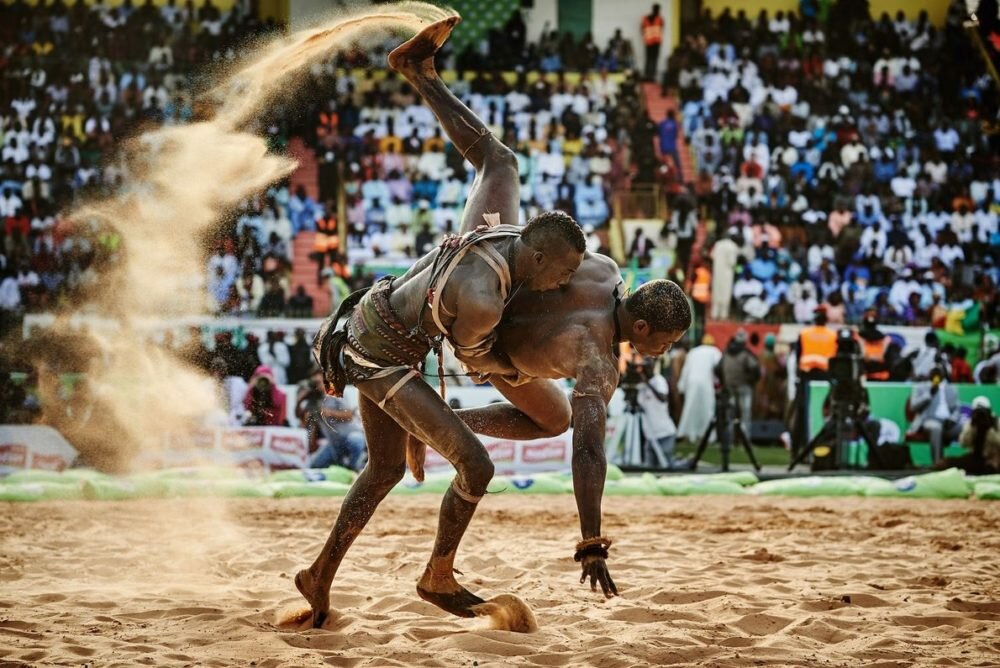
Laamb wrestling stands as Senegal's most popular sport, drawing larger crowds than football and creating celebrities who command massive followings. This traditional form of wrestling with striking combines grappling techniques with punches, creating a dynamic combat sport that has deep roots in Serer and Wolof cultures while evolving into a modern entertainment phenomenon.
Traditional Origins
The practice of Laamb dates back centuries within Senegalese agricultural communities, where young men would compete during harvest celebrations and village festivals. Wrestling served as preparation for warfare, a method of dispute resolution, and entertainment for communities. Champions earned respect and status, with their athletic prowess translating to social standing and marriageability.
Historical Laamb contests occurred without strikes, focusing purely on throwing opponents to the ground. The integration of punching, creating the "Laamb avec frappe" variant, developed more recently, likely influenced by boxing introduction during the colonial period. This evolution demonstrates how traditional sports adapt while maintaining their cultural essence, incorporating new elements that enhance spectacle and competitive depth.
Rules and Competition Format
Modern Laamb matches begin with elaborate pre-fight rituals including dancing, drumming, and mystical preparations involving marabouts who provide spiritual protection through amulets and incantations. Fighters wear traditional loincloths and often cover their bodies with protective gris-gris charms. The psychological warfare during these preliminaries can last longer than the actual combat, building tension and entertaining spectators.
Victory is achieved by forcing any part of an opponent's body except feet and hands to touch the ground, by knockout, or by the opponent's submission. Matches typically last only minutes, with explosive exchanges of strikes and grappling attempts. The rapid pace and potential for dramatic finishes create intense excitement that has captivated Senegalese audiences and increasingly attracts international attention.
Economic and Cultural Impact
Contemporary Laamb has become a multi-million dollar industry in Senegal, with top wrestlers like Bombardier, Tyson, and Balla Gaye 2 achieving rock-star status. Major bouts at the national stadium in Dakar attract audiences of 50,000 or more, with television broadcasts reaching millions. Corporate sponsors invest heavily, recognizing the sport's massive popularity and cultural resonance.
The financial rewards have transformed Laamb from a village pastime into a professional career path. Successful wrestlers earn substantial purses, with championship bouts offering prizes exceeding $200,000. This commercialization has professionalized training, with modern gyms replacing traditional beach workouts, though many fighters maintain spiritual preparations alongside scientific conditioning methods.
The sport's success has inspired similar developments in other West African nations, with Gambia, Mali, and Guinea developing their own wrestling circuits. Regional tournaments foster athletic exchange while preserving the distinct styles and traditions of each culture. This growth mirrors the expansion of Senegalese wrestling championships into international events.
Training and Preparation
Traditional Laamb training emphasizes functional strength developed through manual labor, beach running in sand for resistance, and countless hours of technique practice. Wrestlers also consult marabouts for spiritual preparation, believing mystical protection is as important as physical prowess. The integration of traditional and spiritual elements distinguishes Laamb from purely technical combat sports.
Modern elite wrestlers increasingly incorporate scientific training methods including weight lifting, nutritional planning, and video analysis, while maintaining traditional elements that connect them to cultural heritage. This blending creates a unique training paradigm that honors the past while embracing contemporary athletic science, similar to evolution seen in Dambe boxing.